Orchestrating Multiple AI Roles in Manus with Shared Context and Tool Awareness / 在 Manus 中協調多個 AI 角色,並實現共享情境與工具感知
Author: Bhagya Rana Published: Source: https://medium.com/@bhagyarana80/orchestrating-multiple-ai-roles-in-manus-with-shared-context-and-tool-awareness-9b34859ff791 Fetched: 2026-06-07T02:05:00.991488
Orchestrating Multiple AI Roles in Manus with Shared Context and Tool Awareness / 在 Manus 中協調多個 AI 角色,並實現共享情境與工具感知
How to design distinct AI personas that collaborate seamlessly with unified memory and smart execution / 如何設計各具特色的 AI 人物角色,使其透過統一記憶與智慧執行進行無縫協作
Press enter or click to view image in full size
按 Enter 或點擊以檢視完整尺寸的圖片
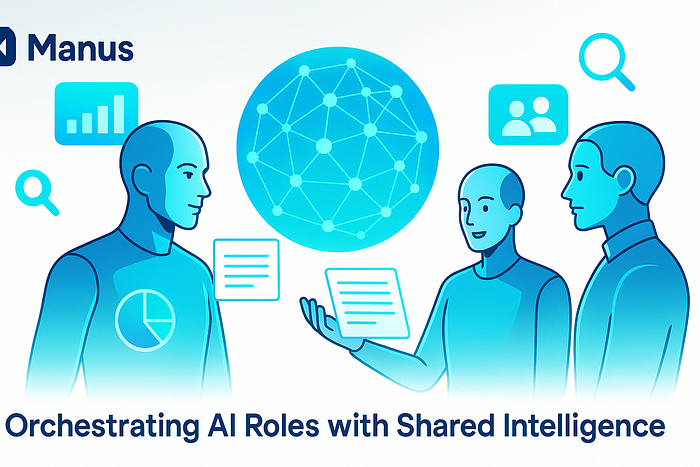
Explore how to build collaborative AI agents in Manus using shared memory, contextual awareness, and dynamic tool integration for advanced workflows.
探索如何在 Manus 中利用共享記憶 (Shared Memory)、情境感知 (Contextual Awareness) 與動態工具整合 (Dynamic Tool Integration),為進階工作流程建構協作型 AI 代理 (AI Agent)。
Introduction: Beyond the One-AI Model / 引言:超越單一 AI 模型
Imagine if your AI assistant could break into a team of specialists — each with a defined role, personality, and toolset — but still think like one mind. That’s not a scene from science fiction. It’s the next frontier in practical agent orchestration using Manus, the rising platform for multi-agent intelligence.
想像一下,如果你的 AI 助理能夠分化成一支由專家組成的團隊——每位專家都有明確定義的角色、個性與工具組——卻仍能像單一心智般思考。這並非科幻電影中的場景,而是利用 Manus(這個崛起中的多代理智慧平台)進行實用代理協調 (Agent Orchestration) 的下一個前沿領域。
Whether you’re building a research copilot, automating cross-department workflows, or experimenting with autonomous agents, the days of one-bot-does-it-all are fading. Instead, modular, persona-driven AIs — coordinated through shared context and intelligent tool awareness — are emerging as the more powerful, scalable design pattern.
無論你是在建構研究副駕駛 (Research Copilot)、自動化跨部門工作流程,還是在實驗自主代理 (Autonomous Agent),「單一機器人包辦一切」的時代正在消逝。取而代之的是模組化、以人物角色驅動 (Persona-driven) 的 AI——透過共享情境與智慧工具感知進行協調——正成為更強大、更具可擴展性的設計模式。
In this article, we’ll dive deep into how to architect multiple AI agents in Manus that operate with clear domain responsibilities but retain a shared brain and execution logic. You’ll learn practical strategies, pitfalls to avoid, and how this approach can unlock richer interactions, smarter automation, and more humanlike collaboration.
在本文中,我們將深入探討如何在 Manus 中架構多個 AI 代理,使其在具備明確領域職責的同時,仍保有共享的大腦與執行邏輯。你將學到實用的策略、應避免的陷阱,以及這種方法如何釋放出更豐富的互動、更智慧的自動化,以及更貼近人類的協作。
Why Split a Single Agent into Multiple Roles? / 為何要將單一代理拆分為多個角色?
Before diving into tooling, let’s explore why you’d want multiple AI roles instead of a monolithic assistant.
在深入探討工具之前,讓我們先探究為何你會想要多個 AI 角色,而非一個單體式 (Monolithic) 的助理。
-
Specialization: Just like human teams, agents perform better when they specialize. A data analyst persona can handle Pandas and charts, while a content strategist handles tone and messaging.
-
專業分工 (Specialization): 就像人類團隊一樣,代理在專業分工時表現更佳。資料分析師人物角色可以處理 Pandas 與圖表,而內容策略師則負責語氣與訊息傳達。
-
Modularity: Updating one agent’s logic or personality doesn’t risk the whole system breaking.
-
模組化 (Modularity): 更新某一個代理的邏輯或個性,不會冒著讓整個系統崩潰的風險。
-
Realism: When users interact with multiple agents, each with a name, style, and role, the experience feels more natural and trustworthy.
-
真實感 (Realism): 當使用者與多個各有名稱、風格與角色的代理互動時,體驗會更自然且更值得信賴。
-
Parallelism: Agents can work concurrently — summarizing, planning, and fact-checking simultaneously.
-
平行處理 (Parallelism): 代理可以並行運作——同時進行摘要、規劃與事實查核。
Now, the challenge: keeping them in sync without context fragmentation or duplicated memory.
而挑戰在於:如何讓它們保持同步,同時避免情境碎片化 (Context Fragmentation) 或記憶重複。
The Secret Sauce: Shared Memory and Context Linking / 秘密武器:共享記憶與情境連結
Manus excels in this regard. With its memory architecture, you can allow multiple agents to read and write from a central context graph. Think of it as a dynamic, evolving knowledge base accessible to all agents.
Manus 在這方面表現卓越。透過其記憶架構,你可以讓多個代理從一個中央情境圖 (Central Context Graph) 讀取與寫入。可以把它想像成一個動態演進、所有代理皆可存取的知識庫。
Key Strategies: / 關鍵策略:
-
Unified memory namespace: Design all agents to log observations, actions, and key decisions into a single context stream.
-
統一記憶命名空間 (Unified Memory Namespace): 設計所有代理,將觀察、行動與關鍵決策記錄到單一的情境串流 (Context Stream) 中。
-
Role tagging: When each agent writes to memory, tag the source (e.g.,
[WriterBot] Suggested intro paragraph...) to preserve traceability. -
角色標記 (Role Tagging): 當每個代理寫入記憶時,標記來源(例如
[WriterBot] Suggested intro paragraph...),以保留可追溯性。 -
System messages with semantic anchors: Seed agents with templated prompts that reference shared variables (
{{project_context}},{{client_feedback}}, etc.) -
帶有語意錨點的系統訊息 (System Messages with Semantic Anchors): 以引用共享變數(
{{project_context}}、{{client_feedback}}等)的範本化提示詞 (Templated Prompts) 來初始化代理。
This way, even though the agents operate independently, they function as a collective intelligence.
如此一來,即使各代理獨立運作,它們仍能作為一個集體智慧 (Collective Intelligence) 運行。
Persona Design: Crafting Distinct Yet Collaborative Agents / 人物角色設計:打造各具特色又能協作的代理
Designing agents with character is more than just giving them a name.
設計具有性格的代理,遠不只是給它們取個名字而已。
Key elements: / 關鍵要素:
-
Voice & Tone: Is this agent friendly or formal? Direct or reflective?
-
聲音與語氣 (Voice & Tone): 這個代理是友善的還是正式的?是直接的還是深思熟慮的?
-
Tool Affinity: Only give tools that match their function (e.g.,
CodeInterpreterfor DevBot,SearchAPIfor FactChecker). -
工具親和性 (Tool Affinity): 只給予符合其功能的工具(例如 DevBot 用
CodeInterpreter,FactChecker 用SearchAPI)。 -
Execution Boundaries: Let each persona take the lead only within its responsibility zone.
-
執行邊界 (Execution Boundaries): 讓每個人物角色僅在其職責範圍內主導工作。
Example setup in Manus:
在 Manus 中的範例設定:
{
  "agents": [
    {
      "name": "Strategist",
      "role": "Content strategy and audience modeling",
      "tools": ["SearchAPI", "PersonaProfiler"],
      "style": "Insightful, data-driven"
    },
    {
      "name": "WriterBot",
      "role": "Writing and tone polishing",
      "tools": ["LanguageModel"],
      "style": "Conversational, polished"
    },
    {
      "name": "AnalystBot",
      "role": "Data review and chart generation",
      "tools": ["CodeInterpreter", "DataVisualizer"],
      "style": "Concise, analytical"
    }
  ]
}
Each agent can invoke tools or consult memory, but they’re designed to avoid overstepping. Manus lets you enforce these constraints at runtime or via prompt schema.
每個代理都可以呼叫工具或查詢記憶,但它們被設計成避免越界。Manus 讓你能在執行階段 (Runtime) 或透過提示詞結構描述 (Prompt Schema) 來強制執行這些限制。
Tool Awareness: Teaching Agents to Know What They Can Use / 工具感知:教導代理知道自己能使用什麼
Another Manus superpower is tool chaining. But here’s the catch — if agents don’t know what tools they have, or when to use them, things fall apart.
Manus 的另一項超能力是工具串接 (Tool Chaining)。但問題在於——如果代理不知道自己擁有哪些工具,或何時該使用它們,一切就會分崩離析。
Embed a self-awareness prompt early in their system message:
在它們的系統訊息中盡早嵌入一段自我感知提示詞 (Self-awareness Prompt):
“You are equipped with
SearchAPIandPersonaProfiler. Use these tools only when answering questions about audience or competitive research.”「你配備了
SearchAPI與PersonaProfiler。只有在回答關於受眾或競爭研究的問題時,才使用這些工具。」
Even better, dynamically inject available tools based on system context. This prevents misuse and improves reliability.
更好的做法是,根據系統情境動態注入可用的工具。這能防止誤用並提升可靠性。
Real-World Use Case: Marketing Content Co-Pilot / 真實世界使用案例:行銷內容副駕駛
Let’s say you’re building an AI that helps a content agency plan and write articles.
假設你正在打造一個協助內容代理商規劃與撰寫文章的 AI。
-
StrategistBot researches the niche and audience using the search tool.
-
StrategistBot(策略師機器人) 使用搜尋工具研究利基市場與受眾。
-
WriterBot drafts headlines and outlines.
-
WriterBot(寫作機器人) 草擬標題與大綱。
-
AnalystBot reviews engagement metrics and suggests performance improvements.
-
AnalystBot(分析師機器人) 審查互動指標 (Engagement Metrics) 並提出成效改善建議。
All three share memory of previous campaigns, brand voice guidelines, and editorial feedback.
這三者共享關於先前行銷活動、品牌聲音指南 (Brand Voice Guidelines) 與編輯回饋的記憶。
Result? Cohesive, on-brand content with specialized depth — without needing to prompt each AI separately.
結果如何?產出連貫一致、符合品牌調性且具備專業深度的內容——而無需個別對每個 AI 下達提示。
Common Pitfalls to Avoid / 應避免的常見陷阱
-
Overlapping agent duties → creates confusion and duplicative responses.
-
代理職責重疊 → 造成混亂與重複的回應。
-
Disjointed memory logs → fragments context and leads to hallucinations.
-
脫節的記憶日誌 → 使情境碎片化並導致幻覺 (Hallucination)。
-
Hardcoded tool lists → reduces flexibility and scalability.
-
寫死的工具清單 (Hardcoded Tool Lists) → 降低彈性與可擴展性。
Instead, invest in:
反之,應投入於:
-
A well-structured memory graph
-
一個結構良好的記憶圖 (Memory Graph)
-
Persona boundaries and scoped permissions
-
人物角色邊界與範圍化權限 (Scoped Permissions)
-
Dynamic tool registration based on roles
-
基於角色的動態工具註冊 (Dynamic Tool Registration)
Conclusion: Toward a More Humanlike AI Ecosystem / 結論:邁向更貼近人類的 AI 生態系
By orchestrating AI agents in Manus with distinct personas, shared context, and tool awareness, you’re not just building assistants — you’re designing intelligent teams. This structure opens the door to deeper automation, more believable conversations, and scalable intelligence that mirrors human collaboration.
透過在 Manus 中以鮮明的人物角色、共享情境與工具感知來協調 AI 代理,你不只是在建構助理——你是在設計智慧團隊。這種結構為更深層的自動化、更可信的對話,以及映照人類協作的可擴展智慧 (Scalable Intelligence) 打開了大門。
As the multi-agent paradigm matures, those who adopt these patterns early will be ahead of the curve in product design, automation, and user experience.
隨著多代理典範 (Multi-agent Paradigm) 日趨成熟,那些及早採用這些模式的人,將在產品設計、自動化與使用者體驗方面領先群倫。
If you’re building with Manus or curious about this kind of architecture, drop a comment below. I’d love to hear how you’re structuring your AI teams — or help brainstorm your next one.
如果你正在使用 Manus 進行開發,或對這類架構感到好奇,歡迎在下方留言。我很想聽聽你如何建構你的 AI 團隊——或協助你為下一個團隊集思廣益。
👉 Found this helpful? Clap it up, share it with your dev team, and follow for more deep dives into practical multi-agent systems and AI orchestration strategies.
👉 覺得這篇文章有幫助嗎? 給它拍拍手、分享給你的開發團隊,並追蹤我以獲取更多關於實用多代理系統與 AI 協調策略的深度解析。